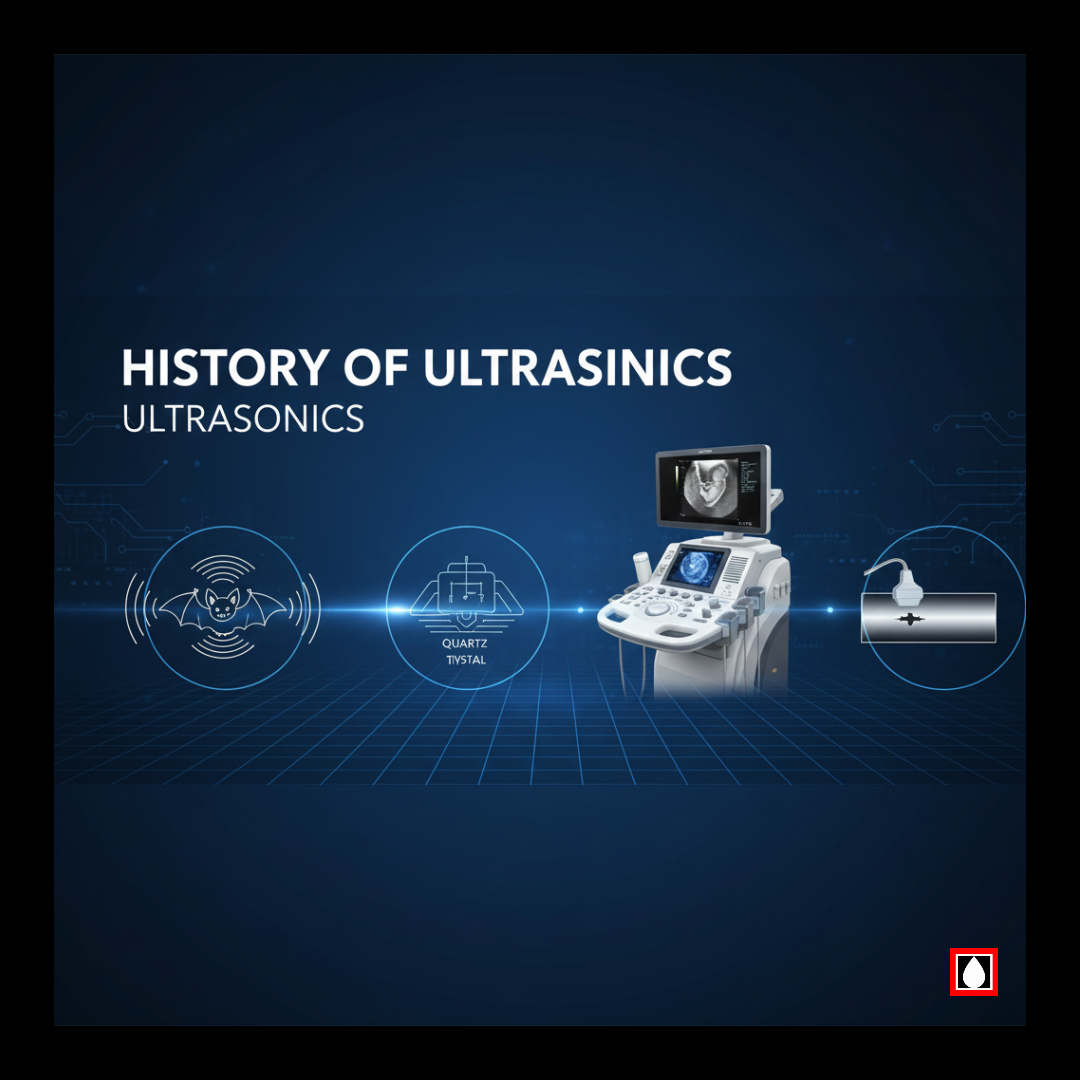
History of Ultrasonics
<h2>Ultrasound</h2><p>First, “Ultrasound” is a noun which has a precise meaning that it is the diagnostic technique that employs high frequency sound waves in order to produce images of interior of people or things. It is known to be widely utilized in health informatics to display body interior parts such as internal organs, tissues, and structures among others. In medical ultrasound technique, a transducer sends ultrasonic waves into the body and the these waves are reflected (echo) when they meets various tissues or organs. Through studying the echoes, a computer develops immediate pictures which can be of use in disease diagnosis and tracing. To summarize, “ultrasonic” is a more general term, that refers to sound waves with frequencies above the range auditable by the human ear, “ultrasound” on the other hand, is a specific use of ultrasonic waves in the sphere of medicine. Most ultrasonic imaging technology relies on ultrasonic waves to produce pictures and it is widely known in the medical profession as ultrasonic imaging or ultrasonography or just ultrasound.<br><br>
Ultrasound – Concept Overview
<br><br><br>
<table style="border-collapse: collapse; width: 100%; margin: 10px 0px;"><thead><tr><th style="border: 1px solid rgb(221, 221, 221); padding: 8px; background-color: rgb(242, 242, 242); font-weight: bold;"><strong>Aspect</strong></th><th style="border: 1px solid rgb(221, 221, 221); padding: 8px; background-color: rgb(242, 242, 242); font-weight: bold;"><strong>Description</strong></th></tr></thead><tbody><tr><td style="border: 1px solid rgb(221, 221, 221); padding: 8px;"><strong>Definition of Ultrasound</strong></td><td style="border: 1px solid rgb(221, 221, 221); padding: 8px;">Ultrasound is a diagnostic technique that uses high-frequency sound waves to create images of the internal structures of people or objects.</td></tr><tr><td style="border: 1px solid rgb(221, 221, 221); padding: 8px;"><strong>Nature of the Term</strong></td><td style="border: 1px solid rgb(221, 221, 221); padding: 8px;">The term <em>ultrasound</em> is a noun and refers specifically to the medical application of ultrasonic sound waves.</td></tr><tr><td style="border: 1px solid rgb(221, 221, 221); padding: 8px;"><strong>Frequency Range</strong></td><td style="border: 1px solid rgb(221, 221, 221); padding: 8px;">Ultrasound operates at frequencies above the audible range of the human ear, typically greater than 20 kHz.</td></tr><tr><td style="border: 1px solid rgb(221, 221, 221); padding: 8px;"><strong>Primary Application</strong></td><td style="border: 1px solid rgb(221, 221, 221); padding: 8px;">Widely used in medical and health informatics fields to visualize internal organs, tissues, blood flow, and body structures.</td></tr><tr><td style="border: 1px solid rgb(221, 221, 221); padding: 8px;"><strong>Working Principle</strong></td><td style="border: 1px solid rgb(221, 221, 221); padding: 8px;">A device called a transducer emits ultrasonic waves into the body. These waves reflect back (echo) when they encounter different tissues or organs.</td></tr><tr><td style="border: 1px solid rgb(221, 221, 221); padding: 8px;"><strong>Image Formation</strong></td><td style="border: 1px solid rgb(221, 221, 221); padding: 8px;">The reflected echoes are analyzed by a computer to generate real-time images for medical observation and diagnosis.</td></tr><tr><td style="border: 1px solid rgb(221, 221, 221); padding: 8px;"><strong>Diagnostic Purpose</strong></td><td style="border: 1px solid rgb(221, 221, 221); padding: 8px;">Helps in detecting diseases, monitoring organ function, and tracking medical conditions safely and non-invasively.</td></tr><tr><td style="border: 1px solid rgb(221, 221, 221); padding: 8px;"><strong>Relation to Ultrasonic Waves</strong></td><td style="border: 1px solid rgb(221, 221, 221); padding: 8px;">Ultrasonic waves are high-frequency sound waves in general, whereas ultrasound refers specifically to their medical use.</td></tr><tr><td style="border: 1px solid rgb(221, 221, 221); padding: 8px;"><strong>Common Terminology</strong></td><td style="border: 1px solid rgb(221, 221, 221); padding: 8px;">Also known as ultrasonography, ultrasonic imaging, or simply ultrasound in medical practice.</td></tr><tr><td style="border: 1px solid rgb(221, 221, 221); padding: 8px;"><strong>Advantages</strong></td><td style="border: 1px solid rgb(221, 221, 221); padding: 8px;">Non-invasive, radiation-free, real-time imaging, safe for repeated use, and cost-effective.</td></tr></tbody></table>
<br></p>
<h2>The History of Ultrasonics</h2><p></p>
<p>The history of ultrasonics dates back to the early twentieth century and marks a significant milestone in the development of modern science and engineering. Ultrasonics refers to the study and application of high-frequency sound waves that exceed the audible range of the human ear. Over the decades, this technology has evolved into one of the most reliable tools for <strong>non-destructive testing (NDT)</strong>, medical imaging, and industrial quality assurance.</p>
<p>In <strong>1917</strong>, the foundation of ultrasonics was laid by <strong>Paul Langevin</strong>, who developed the first practical ultrasonic generator capable of producing sound waves with frequencies up to <strong>20 kHz</strong>. Langevin initially used this generator to study the physical properties of solids and liquids. During his research, he discovered that ultrasonic waves could penetrate metal and reflect from internal discontinuities, making it possible to detect hidden flaws such as cracks and voids. This discovery became the cornerstone of <strong>ultrasonic testing</strong>.</p>
<p>By the <strong>1930s</strong>, engineers and scientists in the <strong>United States, Canada, and Europe</strong> began exploring the industrial applications of ultrasonics. Research efforts focused on using ultrasonic waves to evaluate metal components without damaging them. These studies led to the development of methods for inspecting materials for internal defects, significantly improving manufacturing quality and safety standards.</p>
<p>During <strong>World War II</strong>, ultrasonics gained major importance in the military sector. Ultrasonic testing was widely used to inspect weld quality in military hardware such as ships, aircraft, and weapons. The ability to perform <strong>rapid, non-invasive inspections</strong> greatly enhanced the reliability and safety of critical equipment, making ultrasonics an essential tool during wartime.</p>
<p>In the <strong>1950s</strong>, ultrasonics entered the medical field, marking a major breakthrough in healthcare technology. Medical ultrasonic imaging, including <strong>prenatal ultrasound</strong>, became a widely accepted diagnostic technique. This advancement allowed doctors to visualize internal organs and monitor fetal development safely, without exposure to harmful radiation.</p>
<p>The <strong>1960s</strong> saw a significant expansion in ultrasonic applications across industries such as <strong>aerospace and automotive engineering</strong>. Ultrasonic testing was adopted to inspect aircraft structures, engine components, and automobile parts to ensure structural integrity and performance reliability.</p>
<p>Further technological progress occurred in the <strong>late 1970s</strong>, when advancements in electronics led to the development of more precise and compact ultrasonic testing equipment. These improved systems enabled the detection of smaller imperfections and allowed the inspection of thicker and more complex materials, strengthening the role of ultrasonics in industrial inspection.</p>
<p>Today, ultrasonics is widely used across multiple sectors, including <strong>aerospace, automotive, electrical, marine, oil and gas, and manufacturing industries</strong>. It has become an indispensable part of <strong>non-destructive testing and quality assurance</strong>, allowing materials and products to be evaluated without causing damage.</p>
<p>In recent years, ultrasonics has continued to evolve with the introduction of <strong>phased array ultrasonic testing (PAUT)</strong>, <strong>automation</strong>, <strong>remote inspection</strong>, and <strong>artificial intelligence (AI)</strong>-based analysis. These innovations are shaping the future of ultrasonic testing by improving accuracy, speed, and reliability, ensuring that ultrasonics remains a critical technology in modern inspection and diagnostics.</p>
<p></p>
<h2>Beginnings of Nondestructive Evaluation (NDE)</h2><p></p>
<p>Nondestructive Testing (NDT), also known as <strong>Nondestructive Evaluation (NDE)</strong>, has been in practice for several decades and plays a crucial role in ensuring the safety and reliability of engineering structures. Early developments in NDT were strongly influenced by technological advancements during the <strong>Second World War</strong>, particularly the urgent need for reliable defect detection in critical military and industrial components.</p>
<p>The initial philosophy guiding NDT was based on the <strong>“safe life” design concept</strong>. According to this principle, a structure or component was expected to remain free of macroscopic defects throughout its service life. If any significant flaw was detected during inspection, the component was immediately removed from service. To support this approach, several inspection techniques were developed using different forms of energy, including <strong>ultrasonics, eddy current testing, radiography (X-rays), dye penetrant testing, and magnetic particle inspection</strong>. These methods enabled engineers to detect surface and subsurface defects without damaging the component.</p>
<p>A major transformation in the field of NDE occurred in the <strong>early 1970s</strong>. Advancements in inspection instrumentation allowed earlier detection of cracks and discontinuities. However, this led to an unintended consequence—many components were rejected even though the detected flaws did not significantly increase the probability of failure. Around the same time, the scientific discipline of <strong>fracture mechanics</strong> emerged, providing a more rational framework for evaluating structural integrity.</p>
<p>Fracture mechanics made it possible to predict whether a crack of a given size would propagate to failure under a specific load, provided the <strong>fracture toughness</strong> of the material was known. This understanding gave rise to a new design philosophy known as <strong>“damage-tolerant design.”</strong> Under this approach, components containing known defects could remain in service as long as it could be demonstrated that the defects would not grow to a critical size during the remaining service life.</p>
<p>This shift introduced new challenges for the nondestructive testing community. Merely detecting the presence of a flaw was no longer sufficient. Engineers now required <strong>quantitative information about flaw size, shape, and location</strong> to support fracture mechanics–based life prediction models. This demand led to the development of <strong>Quantitative Nondestructive Evaluation (QNDE)</strong>, a specialized branch of NDE focused on accurate measurement and characterization of defects.</p>
<p>The need for quantitative data was especially critical in high-risk sectors such as <strong>defense, aerospace, and nuclear power industries</strong>, where structural failure could have catastrophic consequences. As a result, major research initiatives were launched worldwide to advance QNDE technologies. Notable research centers established during this period include the <strong>Center for Nondestructive Evaluation at Iowa State University</strong> (originating from research at the Rockwell International Science Center), the <strong>Electric Power Research Institute (EPRI)</strong> in Charlotte, North Carolina, the <strong>Fraunhofer Institute for Nondestructive Testing</strong> in Saarbrücken, Germany, and nondestructive testing research centers in <strong>Harwell, England</strong>.</p>
<p>These developments marked the transition of NDE from a purely inspection-based practice to a <strong>science-driven engineering discipline</strong>, integrating materials science, fracture mechanics, and advanced sensing technologies. Today, NDE continues to evolve with the integration of <strong>digital signal processing, automation, artificial intelligence, and advanced imaging techniques</strong>, making it an essential component of modern structural integrity assessment and lifecycle management.</p>
<p></p>
<h2>Who Invented Ultrasound? | History and Key Contributors</h2><p></p>
<p>Ultrasound technology, also known as <strong>medical sonography</strong>, was not invented by a single individual. Instead, it is the result of <strong>many decades of scientific research and technological development</strong> carried out by physicists, engineers, and medical professionals across the world. Much like modern transportation or electricity, ultrasound evolved through contributions from multiple disciplines rather than a single inventor.</p>
<p>Below are the <strong>key milestones and contributors</strong> in the development of ultrasound technology.</p>
<hr>
<h2><strong>Early Discoveries (Late 19th – Early 20th Century)</strong></h2>
<p>The foundation of ultrasound technology was laid by <strong>Pierre Curie and Jacques Curie</strong> in <strong>1880</strong>, when they discovered the phenomenon of <strong>piezoelectricity</strong>. They found that certain crystals generate an electric charge when mechanical pressure is applied to them. This discovery later enabled the development of <strong>ultrasound transducers</strong>, which convert electrical energy into high-frequency sound waves and vice versa.</p>
<hr>
<h2><strong>World War I and the Birth of Practical Ultrasound (1914–1918)</strong></h2>
<p>One of the first practical applications of ultrasound occurred during <strong>World War I</strong>. French physicist <strong>Paul Langevin</strong>, along with his team, developed underwater <strong>sonar systems</strong> using ultrasonic waves to detect enemy submarines. This marked the <strong>first large-scale application of ultrasonic technology</strong> and demonstrated its ability to detect objects beneath the surface of water.</p>
<hr>
<h2><strong>Medical Ultrasound Begins (1930s–1940s)</strong></h2>
<p>The medical application of ultrasound began in the <strong>1930s and 1940s</strong>. Austrian neurologist <strong>Karl Dussik</strong> was one of the pioneers who experimented with ultrasound for imaging the <strong>human brain</strong>. Around the same time, <strong>Dr. Stepan Dussik</strong> explored the use of ultrasound waves for diagnostic purposes, laying the groundwork for medical imaging.</p>
<hr>
<h2><strong>Expansion into Clinical Practice (1950s)</strong></h2>
<p>During the <strong>1950s</strong>, ultrasound gained recognition as a diagnostic medical tool. <strong>Ian Donald</strong>, a Scottish obstetrician, played a crucial role in advancing <strong>obstetric ultrasound</strong>, making it possible to visualize fetal development safely. This period marked the beginning of widespread clinical acceptance of ultrasound in hospitals.</p>
<hr>
<h2><strong>Technological Advancements (1960s–1970s)</strong></h2>
<p>In the <strong>1960s</strong>, the development of <strong>continuous wave Doppler ultrasound</strong> enabled the measurement of blood flow within the human body. This innovation revolutionized <strong>cardiology and vascular medicine</strong>.</p>
<p>The <strong>1970s</strong> saw the introduction of <strong>real-time ultrasound imaging</strong>, which allowed doctors to observe moving organs and tissues instantly. This advancement greatly improved diagnostic accuracy and expanded the clinical applications of ultrasound.</p>
<hr>
<h2><strong>Modern Ultrasound Developments (1980s to Present)</strong></h2>
<p>From the <strong>1980s onward</strong>, ultrasound technology experienced rapid advancements, including:</p>
<ul>
<li>
<p><strong>Color Doppler ultrasound</strong></p>
</li>
<li>
<p><strong>3D and 4D ultrasound imaging</strong></p>
</li>
<li>
<p>Improved image resolution and portability</p>
</li>
</ul>
<p>These innovations enhanced diagnostic capabilities and expanded the use of ultrasound in fields such as <strong>radiology, obstetrics, cardiology, and emergency medicine</strong>.</p>
<hr>
<h2><strong>Beyond Medicine: Other Applications of Ultrasound</strong></h2>
<p>Although ultrasound is widely associated with medical imaging, its applications extend far beyond healthcare. Ultrasonic technology is also used in:</p>
<ul>
<li>
<p><strong>Non-Destructive Testing (NDT)</strong></p>
</li>
<li>
<p><strong>Material inspection</strong></p>
</li>
<li>
<p><strong>Industrial quality control</strong></p>
</li>
<li>
<p><strong>Underwater exploration and sonar systems</strong></p>
</li>
</ul>
<hr>
<h2><strong>Conclusion</strong></h2>
<p>In conclusion, ultrasound technology was <strong>not invented by a single person</strong>, but rather evolved through the combined efforts of scientists, engineers, and medical experts over many decades. From the discovery of piezoelectricity by the Curie brothers to modern 4D imaging and Doppler techniques, ultrasound continues to be a powerful and evolving technology used across multiple industries.</p>
<p></p>
<h2>Why Ultrasonic Sensors Are Used | Applications, Working Principle & Benefits</h2><p></p>
<p>Ultrasonic sensors are widely used across many industries due to their ability to <strong>measure distance, detect objects, and sense levels without physical contact</strong>. These sensors operate by transmitting <strong>high-frequency sound waves (ultrasonic waves)</strong> and measuring the time taken for the waves to reflect back from an object. Using this <strong>time-of-flight principle</strong>, ultrasonic sensors can accurately determine distance, presence, or movement.</p>
<p>Because they work reliably in challenging environments such as dust, smoke, darkness, and moisture, ultrasonic sensors have become a preferred choice in modern automation, robotics, and monitoring systems.</p>
<hr>
<h2><strong>1. Distance Measurement</strong></h2>
<p>One of the primary reasons ultrasonic sensors are used is for <strong>fast and accurate distance measurement</strong> without touching the object. They provide reliable results even for transparent or irregular surfaces.</p>
<p><strong>Common applications include:</strong></p>
<ul>
<li>
<p><strong>Industrial automation:</strong> Object detection and position control in manufacturing lines</p>
</li>
<li>
<p><strong>Robotics:</strong> Obstacle avoidance and navigation</p>
</li>
<li>
<p><strong>Automotive systems:</strong> Parking assist, collision avoidance, animal detection, and adaptive cruise control</p>
</li>
<li>
<p><strong>Home appliances:</strong> Washing machines, dishwashers, and robotic vacuum cleaners</p>
</li>
</ul>
<hr>
<h2><strong>2. Object Detection and Presence Sensing</strong></h2>
<p>Ultrasonic sensors are effective in detecting the <strong>presence or absence of objects</strong> within a defined range, making them ideal for automation and security systems.</p>
<p><strong>Used in:</strong></p>
<ul>
<li>
<p><strong>Security systems:</strong> Intrusion detection and access control</p>
</li>
<li>
<p><strong>Retail systems:</strong> Automatic doors, vending machines, and inventory management</p>
</li>
<li>
<p><strong>Conveyor systems:</strong> Object counting, sorting, and spacing</p>
</li>
<li>
<p><strong>Parking garages:</strong> Monitoring vehicle occupancy</p>
</li>
</ul>
<hr>
<h2><strong>3. Liquid Level Measurement</strong></h2>
<p>Ultrasonic sensors are commonly used to measure <strong>liquid levels in tanks and containers</strong> accurately without direct contact with the liquid.</p>
<p><strong>Industries benefiting include:</strong></p>
<ul>
<li>
<p><strong>Agriculture:</strong> Monitoring water levels in irrigation systems</p>
</li>
<li>
<p><strong>Chemical processing:</strong> Storage tanks and chemical reactors</p>
</li>
<li>
<p><strong>Environmental monitoring:</strong> Wastewater treatment plants and reservoirs</p>
</li>
</ul>
<hr>
<h2><strong>4. Flow Rate Measurement</strong></h2>
<p>Ultrasonic sensors can measure the <strong>flow rate of liquids or gases</strong> by analyzing the speed of sound traveling through the fluid.</p>
<p><strong>Key applications:</strong></p>
<ul>
<li>
<p><strong>Water and wastewater treatment:</strong> Flow monitoring and process control</p>
</li>
<li>
<p><strong>Oil and gas industry:</strong> Custody transfer metering and pipeline monitoring</p>
</li>
</ul>
<hr>
<h2><strong>5. Proximity Sensing</strong></h2>
<p>Ultrasonic sensors provide <strong>touchless proximity detection</strong>, allowing objects or people to be detected without physical interaction.</p>
<p><strong>Common uses include:</strong></p>
<ul>
<li>
<p><strong>Home automation:</strong> Touchless switches, faucets, and lighting systems</p>
</li>
<li>
<p><strong>Healthcare:</strong> Automatic hand sanitizers and soap dispensers</p>
</li>
<li>
<p><strong>Human–computer interaction:</strong> Gesture recognition systems</p>
</li>
</ul>
<hr>
<h2><strong>6. Level and Depth Sensing</strong></h2>
<p>Beyond liquid level measurement, ultrasonic sensors are also used to measure the <strong>depth of rivers, lakes, and seas</strong>.</p>
<p><strong>Applications include:</strong></p>
<ul>
<li>
<p><strong>Hydrology and environmental surveys</strong></p>
</li>
<li>
<p><strong>Marine navigation</strong>, especially in low-visibility conditions</p>
</li>
</ul>
<hr>
<h2><strong>7. Obstacle Avoidance</strong></h2>
<p>In <strong>robotics and autonomous vehicles</strong>, ultrasonic sensors play a critical role in <strong>detecting obstacles and preventing collisions</strong>, ensuring safe navigation.</p>
<hr>
<h2><strong>8. Quality Control and Inspection</strong></h2>
<p>In manufacturing, ultrasonic sensors are used for <strong>quality control</strong>, including:</p>
<ul>
<li>
<p>Thickness measurement</p>
</li>
<li>
<p>Weld inspection</p>
</li>
<li>
<p>Detection of material defects and variations</p>
</li>
</ul>
<hr>
<h2><strong>Advantages of Ultrasonic Sensors</strong></h2>
<p>Ultrasonic sensors are preferred because they offer:</p>
<ul>
<li>
<p><strong>Non-contact measurement</strong></p>
</li>
<li>
<p><strong>High accuracy and reliability</strong></p>
</li>
<li>
<p><strong>Resistance to dust, smoke, and lighting conditions</strong></p>
</li>
<li>
<p><strong>Low maintenance and long service life</strong></p>
</li>
</ul>
<hr>
<h2><strong>Conclusion</strong></h2>
<p>Ultrasonic sensors are used because of their <strong>versatility, accuracy, and reliability in non-standard and harsh environments</strong>. From industrial automation and automotive systems to healthcare and environmental monitoring, ultrasonic sensors provide safe, efficient, and precise sensing solutions. Their ability to operate without physical contact makes them an essential component in modern technology across multiple industries.</p>
<p></p>
<h2>Are Ultrasonic Waves Harmful? | Safety, Risks, and Uses Explained</h2><p></p>
<p>Ultrasonic waves are sound waves with frequencies <strong>above the audible range of the human ear</strong>, typically higher than <strong>20,000 hertz (20 kHz)</strong>. These waves are widely used in <strong>medical imaging, industrial testing, object detection, and automation</strong>. When used correctly and within established safety limits, ultrasonic waves are generally <strong>not harmful to humans</strong>. However, their safety depends on several important factors such as frequency, intensity, exposure duration, and distance from the source.</p>
<hr>
<h2><strong>Factors That Determine the Safety of Ultrasonic Waves</strong></h2>
<h3><strong>1. Frequency and Intensity</strong></h3>
<p>The safety of ultrasonic waves largely depends on their <strong>frequency and intensity</strong>. Low-intensity ultrasonic waves, commonly used in <strong>medical diagnostics, ultrasonic testing (NDT), and sensors</strong>, are considered safe. However, exposure to <strong>high-intensity ultrasound</strong> beyond recommended limits can cause unwanted biological effects, including tissue damage.</p>
<hr>
<h3><strong>2. Exposure Duration</strong></h3>
<p>Short-term exposure to low-intensity ultrasonic waves, such as during diagnostic ultrasound scans, is widely regarded as safe. Prolonged exposure to <strong>high-intensity ultrasound</strong>, however, may lead to <strong>tissue heating</strong> or mechanical stress, which can be harmful if not properly controlled.</p>
<hr>
<h3><strong>3. Distance from the Source</strong></h3>
<p>The intensity of ultrasonic waves decreases as the distance from the source increases. Being very close to a high-power ultrasonic source can increase the risk of exposure. In medical and industrial applications, devices are designed to <strong>direct ultrasonic energy only to specific target areas</strong>, minimizing unnecessary exposure.</p>
<hr>
<h3><strong>4. Frequency Range and Tissue Interaction</strong></h3>
<p>Different tissues in the human body respond differently to ultrasonic waves based on their <strong>density and composition</strong>. Medical ultrasound systems carefully select safe frequencies and intensities to image soft tissues without causing harm.</p>
<hr>
<h3><strong>5. Regulations and Safety Guidelines</strong></h3>
<p>Regulatory authorities and professional organizations, such as the <strong>U.S. Food and Drug Administration (FDA)</strong> and international health bodies, establish strict guidelines for the safe use of ultrasonic equipment. Adhering to these standards ensures that ultrasonic applications remain safe in both medical and industrial environments.</p>
<hr>
<h2><strong>Common Safe Uses of Ultrasonic Waves</strong></h2>
<h3><strong>Medical Imaging</strong></h3>
<p>Ultrasound imaging (sonography) is widely used in <strong>obstetrics, gynecology, cardiology, and radiology</strong>. It is a non-invasive and radiation-free diagnostic method, making it safe for patients and healthcare professionals when used properly.</p>
<hr>
<h3><strong>Industrial Testing</strong></h3>
<p>In <strong>non-destructive testing (NDT)</strong>, ultrasonic waves are used to inspect materials for internal defects, measure thickness, and assess structural integrity without damaging the component.</p>
<hr>
<h3><strong>Object Detection and Sensors</strong></h3>
<p>Ultrasonic sensors used in <strong>automotive parking systems, robotics, home automation, and security systems</strong> emit low-power ultrasonic signals, which are safe for human interaction.</p>
<hr>
<h2><strong>When Can Ultrasonic Waves Be Harmful?</strong></h2>
<p>Ultrasonic waves can pose risks when:</p>
<ul>
<li>
<p><strong>Intensity levels exceed recommended limits</strong></p>
</li>
<li>
<p><strong>Exposure duration is too long</strong></p>
</li>
<li>
<p><strong>Safety guidelines are ignored</strong></p>
</li>
<li>
<p><strong>Equipment is poorly designed or improperly operated</strong></p>
</li>
</ul>
<p>High-intensity ultrasound, if misused, may cause tissue heating or mechanical damage, particularly in medical and industrial applications.</p>
<p></p>
<h2>History of Ultrasound | Evolution, Inventions, and Applications</h2><p></p>
<p>Ultrasound is a term derived from the words <strong>“ultra”</strong> (beyond) and <strong>“sound”</strong>, referring to sound waves with frequencies higher than the audible range of the human ear. The history of ultrasound is both rich and fascinating, spanning over a century of scientific discovery and technological advancement. Today, ultrasound technology is widely used in <strong>medicine, industry, marine exploration, and non-destructive testing</strong>, making it an indispensable tool in modern society.</p>
<p>Below is a detailed overview of the <strong>key milestones in the history of ultrasound</strong>.</p>
<hr>
<h2><strong>Early Discoveries (Late 19th – Early 20th Century)</strong></h2>
<p>The development of ultrasound technology began with early research in <strong>acoustics and sound wave behavior</strong>. A major breakthrough occurred in <strong>1880</strong>, when <strong>Pierre Curie and Jacques Curie</strong> discovered <strong>piezoelectricity</strong>—the ability of certain materials to generate an electric charge when subjected to mechanical stress. This discovery later became the foundation for the development of ultrasound transducers.</p>
<hr>
<h2><strong>World War I and the First Practical Use (1914–1918)</strong></h2>
<p>One of the earliest practical applications of ultrasound took place during <strong>World War I</strong>. French physicist <strong>Paul Langevin</strong> pioneered the use of ultrasonic waves in <strong>sonar systems</strong> to detect enemy submarines underwater. This innovation marked the first large-scale application of ultrasonic technology and demonstrated its ability to locate objects hidden from view.</p>
<hr>
<h2><strong>Medical Ultrasound Begins (1930s–1940s)</strong></h2>
<p>During the <strong>1930s and 1940s</strong>, ultrasound began to find applications in the medical field. Austrian neurologist <strong>Karl Dussik</strong> was among the first to experiment with ultrasound for imaging the <strong>human brain</strong>. His work laid the foundation for the development of medical ultrasound imaging.</p>
<hr>
<h2><strong>Breakthrough in Medical Imaging (1950s)</strong></h2>
<p>In the <strong>1950s</strong>, significant progress was made in medical ultrasound technology. In the United States, physicist <strong>George Ludwig</strong> and radiologist <strong>Douglas Howry</strong> developed one of the first practical medical ultrasound machines known as the <strong>Reflectoscope</strong>. This device was used primarily in <strong>obstetrics and gynecology</strong>, marking a turning point in diagnostic imaging.</p>
<hr>
<h2><strong>Doppler Ultrasound Innovation (1960s)</strong></h2>
<p>The <strong>1960s</strong> saw the introduction of <strong>continuous-wave Doppler ultrasound</strong>, which enabled the measurement of <strong>blood flow</strong> within the human body. This advancement revolutionized <strong>cardiology and vascular medicine</strong>, allowing doctors to diagnose heart and circulatory conditions more accurately.</p>
<hr>
<h2><strong>Real-Time Imaging Era (1970s)</strong></h2>
<p>In the <strong>1970s</strong>, real-time ultrasound imaging was developed, making it possible to view moving organs and tissues instantly. This advancement significantly improved diagnostic accuracy and expanded the clinical use of ultrasound across various medical specialties.</p>
<hr>
<h2><strong>Advanced Ultrasound Technologies (1980s and Beyond)</strong></h2>
<p>From the <strong>1980s onward</strong>, ultrasound technology advanced rapidly with innovations such as:</p>
<ul>
<li>
<p><strong>Color Doppler ultrasound</strong></p>
</li>
<li>
<p><strong>3D ultrasound imaging</strong></p>
</li>
<li>
<p><strong>4D ultrasound (real-time 3D imaging)</strong></p>
</li>
</ul>
<p>These developments expanded diagnostic capabilities and improved image quality, making ultrasound an essential diagnostic tool in modern healthcare.</p>
<hr>
<h2><strong>Non-Medical Applications of Ultrasound</strong></h2>
<p>Beyond medicine, ultrasound has found widespread use in several non-medical fields, including:</p>
<ul>
<li>
<p><strong>Non-destructive testing (NDT)</strong> for material inspection</p>
</li>
<li>
<p><strong>Industrial quality control</strong></p>
</li>
<li>
<p><strong>Marine surveys and underwater exploration</strong></p>
</li>
<li>
<p><strong>Thickness measurement and flaw detection</strong></p>
</li>
</ul>
<p>These applications highlight the versatility of ultrasonic technology.</p>
<hr>
<h2><strong>Current Applications of Ultrasound</strong></h2>
<p>Today, ultrasound is widely used in almost every branch of medicine, including:</p>
<ul>
<li>
<p>Obstetrics and gynecology</p>
</li>
<li>
<p>Cardiology</p>
</li>
<li>
<p>Radiology</p>
</li>
<li>
<p>Urology</p>
</li>
<li>
<p>Emergency and critical care</p>
</li>
</ul>
<p>It is also used in <strong>therapy, diagnostics, and guided medical procedures</strong>, making it a cornerstone of modern healthcare.</p>
<hr>
<h2><strong>Ongoing Research and Future Developments</strong></h2>
<p>Research and development in ultrasound technology continue to expand its capabilities. Emerging areas include:</p>
<ul>
<li>
<p><strong>Therapeutic ultrasound</strong></p>
</li>
<li>
<p><strong>Point-of-care ultrasound (POCUS)</strong></p>
</li>
<li>
<p><strong>AI-assisted ultrasound imaging</strong></p>
</li>
<li>
<p><strong>Portable and handheld ultrasound devices</strong></p>
</li>
</ul>
<p>These innovations are shaping the future of ultrasound technology across medical and industrial domains.</p>
<p></p>
<h2>Is Ultrasonic and Ultrasound the Same? | Key Differences Explained</h2><p></p>
<p>The terms <strong>“ultrasonic”</strong> and <strong>“ultrasound”</strong> are often used interchangeably, but they do <strong>not mean exactly the same thing</strong>. Although they are closely related, each term is used in a <strong>different context</strong> and has a distinct meaning. Understanding the difference is important, especially in fields such as <strong>medicine, engineering, and industrial applications</strong>.</p>
<hr>
<h2><strong>What Is Ultrasonic?</strong></h2>
<p><strong>Ultrasonic</strong> is an <strong>adjective</strong> that describes <strong>sound waves or vibrations with frequencies higher than the range of human hearing</strong>. Humans can typically hear sound frequencies up to <strong>20,000 hertz (20 kHz)</strong>. Any sound wave above this limit is considered ultrasonic.</p>
<h3><strong>Key Features of Ultrasonic Waves</strong></h3>
<ul>
<li>
<p>Frequency above 20 kHz</p>
</li>
<li>
<p>Not audible to the human ear</p>
</li>
<li>
<p>Used in both medical and non-medical applications</p>
</li>
</ul>
<h3><strong>Common Applications of Ultrasonic Waves</strong></h3>
<ul>
<li>
<p><strong>Ultrasonic sensors</strong> for distance measurement and object detection</p>
</li>
<li>
<p><strong>Industrial testing</strong> and non-destructive evaluation (NDT)</p>
</li>
<li>
<p><strong>Ultrasonic cleaning</strong> of precision components</p>
</li>
<li>
<p><strong>Robotics and automation systems</strong></p>
</li>
</ul>
<p>In short, <em>ultrasonic</em> refers to the <strong>type of sound wave</strong>, not a specific application.</p>
<hr>
<h2><strong>What Is Ultrasound?</strong></h2>
<p><strong>Ultrasound</strong> is a <strong>noun</strong> that refers specifically to a <strong>diagnostic imaging technique</strong> that uses ultrasonic waves. It is most commonly associated with <strong>medical imaging</strong>.</p>
<p>In medical ultrasound:</p>
<ul>
<li>
<p>A <strong>transducer</strong> emits ultrasonic waves into the body</p>
</li>
<li>
<p>The waves reflect (echo) when they encounter tissues or organs</p>
</li>
<li>
<p>A computer analyzes these echoes to create <strong>real-time images</strong></p>
</li>
</ul>
<h3><strong>Common Medical Uses of Ultrasound</strong></h3>
<ul>
<li>
<p>Imaging internal organs</p>
</li>
<li>
<p>Monitoring fetal development during pregnancy</p>
</li>
<li>
<p>Examining heart function (echocardiography)</p>
</li>
<li>
<p>Diagnosing soft tissue conditions</p>
</li>
</ul>
<p>Ultrasound is also known as <strong>ultrasonography</strong> or <strong>ultrasonic imaging</strong> in medical practice.<br><br>
Ultrasonic vs Ultrasound: Key Differences
<br><br>
</p><table style="border-collapse: collapse; width: 100%; margin: 10px 0px;"><thead><tr><th style="border: 1px solid rgb(221, 221, 221); padding: 8px; background-color: rgb(242, 242, 242); font-weight: bold;">Aspect</th><th style="border: 1px solid rgb(221, 221, 221); padding: 8px; background-color: rgb(242, 242, 242); font-weight: bold;">Ultrasonic</th><th style="border: 1px solid rgb(221, 221, 221); padding: 8px; background-color: rgb(242, 242, 242); font-weight: bold;">Ultrasound</th></tr></thead><tbody><tr><td style="border: 1px solid rgb(221, 221, 221); padding: 8px;">Term Type</td><td style="border: 1px solid rgb(221, 221, 221); padding: 8px;">Adjective</td><td style="border: 1px solid rgb(221, 221, 221); padding: 8px;">Noun</td></tr><tr><td style="border: 1px solid rgb(221, 221, 221); padding: 8px;">Meaning</td><td style="border: 1px solid rgb(221, 221, 221); padding: 8px;">Describes high-frequency sound waves</td><td style="border: 1px solid rgb(221, 221, 221); padding: 8px;">Diagnostic imaging technique</td></tr><tr><td style="border: 1px solid rgb(221, 221, 221); padding: 8px;">Frequency Range</td><td style="border: 1px solid rgb(221, 221, 221); padding: 8px;">Above 20 kHz</td><td style="border: 1px solid rgb(221, 221, 221); padding: 8px;">Uses ultrasonic frequencies</td></tr><tr><td style="border: 1px solid rgb(221, 221, 221); padding: 8px;">Usage</td><td style="border: 1px solid rgb(221, 221, 221); padding: 8px;">Medical and non-medical fields</td><td style="border: 1px solid rgb(221, 221, 221); padding: 8px;">Primarily medical</td></tr><tr><td style="border: 1px solid rgb(221, 221, 221); padding: 8px;">Examples</td><td style="border: 1px solid rgb(221, 221, 221); padding: 8px;">Ultrasonic sensors, ultrasonic testing</td><td style="border: 1px solid rgb(221, 221, 221); padding: 8px;">Prenatal ultrasound, cardiac ultrasound</td></tr></tbody></table><h2><strong>Conclusion</strong></h2>
<p>To summarize, <strong>ultrasonic and ultrasound are related but not the same</strong>.</p>
<ul>
<li>
<p><strong>Ultrasonic</strong> refers to <strong>high-frequency sound waves</strong> beyond human hearing.</p>
</li>
<li>
<p><strong>Ultrasound</strong> is a <strong>specific application of ultrasonic waves</strong>, mainly used in medical imaging.</p>
</li>
</ul>
<p>Understanding this distinction helps clarify discussions in medicine, engineering, and industrial technology.</p>
<br><p></p>
<p></p>